

The Berlin connection
As techno spread from Detroit in the late ‘80s and early ‘90s, it quickly found popularity in the UK, tying into the burgeoning acid house scene and inspiring artists such as A Guy Called Gerald and 808 State and later the likes of Kirk Degiorgio, The Black Dog and many others.
As Degiorgio explained in 2013, as the UK scene established itself, it quickly created a relationship with the second generation of techno artists emerging in Detroit.
“Shut Up and Dance sampled Carl Craig so he sampled them back. There was a lot of that. [Craig] loved the stuff we were doing and licensed some of it for Planet E. The third release on [Degiorgio’s label] A.R.T. was from him before he was as well known. It really was the birth of it all.”
SEE MORE: Are you pronouncing names of Berlin DJs wrong?
While the genre was popular in the UK and elsewhere in Europe – such as Belgium, where the label R&S became a significant supporter – it was Berlin that quickly established itself as techno’s second city.
The fall of the Berlin Wall in 1989 and a new mood of open-mindedness created the perfect breeding ground for techno’s anti-establishment and futuristic undertones and sense of sonic adventurousness.
Dimitri Hegemann, founder of Berlin Atonal festival, is credited with first introducing the pioneers of techno to Berlin in the mid-’80s. It was in ’89, however, that the scene really took root; a year that saw the first ever Love Parade – and its influential afterparty at Hegemann’s Ufo club – as well as Mark Ernestus founding the influential Hard Wax record store.
SEE MORE: Why is Berlin’s Club Rule “No Photos” so Important?
Over the years, techno artists from all over the world have relocated to Berlin, from Richie Hawtin to modern luminaries such as Objekt, Blawan and PAN-founder Bill Kouligas.
The ‘Berghain sound’
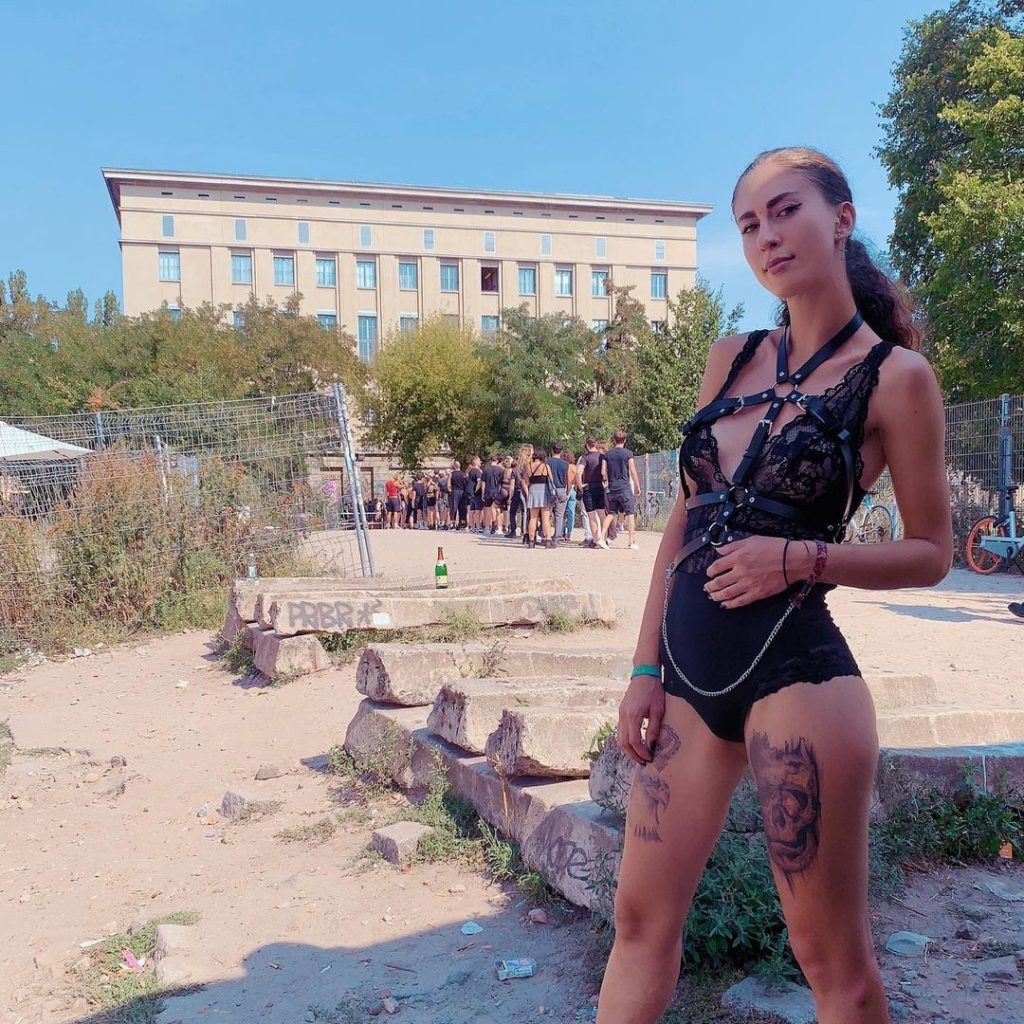
In recent times, Berlin techno has been synonymous with Berghain – a club world-famous for its unpredictable door policy as much as its music – and its associated label, Ostgut Ton.
The ‘Berghain sound’ (if there is one), is probably most closely associated with artists such as Ben Klock and Marcel Dettmann, whose atmospheric but tough tracks play like a more industrial update to the dub techno of ‘90s Berlin. It’s a take on the genre that puts the kick at the forefront, too, often using sub-heavy, reverb-drenched drums as both rhythmic backbone and bassline.
The percussion in modern Berlin techno often has a sound designed to match the post-industrial clubs where tracks are regularly played – effect treatments are dark and cavernous, bringing to mind spaces like the former powerplant that houses Berghain’s main dancefloor.
SEE MORE: Non-Techno Tracks You Will Definitely Hear At Berghain
Speaking to FM in 2019, Berghain regular Fiedel shared his secrets to creating tough, Berlin-style drums.
“As a source I sometimes use the Max For Live Drum Synth plugin, and sometimes I use [Live’s] onboard drums like the 808s or 909s. I’ll layer drums, though, in order to separate the lower and higher parts so I can focus on the low end. I’ll have the same drums – for example a 909 – split into two so I can shape both elements separately.
Then, to create powerful drums, of course, you have to compress them and limit them. That’s the key to making sure you can hear them and feel them in the club.”
SEE MORE: Why was Richie Hawtin Kicked Out Of Berghain
It’s no coincidence that, alongside its long history as a hub for techno artists, Berlin is also home to several significant music technology brands. The crossover between the genre and those creating new music technology has always been strong in the city – Ableton co-founders Gerhard Behles and Robert Henke were both members of minimal techno outfit Monolake at the time of the company’s launch, and Native Instruments has employed a number of notable DJs such as Objekt and Errorsmith, the latter of whom developed the company’s excellent Razor synth.